Gardener Kentish Town — Recycling & Sustainability
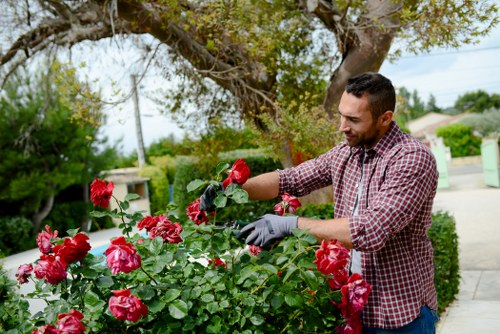 As Gardener Kentish Town, our commitment is to create an eco-friendly waste disposal area and a thriving sustainable rubbish gardening area where soil, resources and community value are conserved. This page explains our practical approach to improving local recycling rates, reducing carbon in our operations and partnering with borough services and charities to keep Kentish Town green. We set clear targets, follow the borough's established waste separation practices, and prioritise reuse across every garden project.
We work with residents and landlords across Kentish Town to align with the borough's approach to waste separation — food waste, mixed recycling, glass and cans, and residual waste each have their place. By integrating municipal guidance into our gardeners' routines we avoid contamination, increase diversion from landfill and support council recycling streams when moving soil, plant pots and green waste. Our sustainable rubbish gardening area is designed to complement local kerbside systems rather than bypass them.
 Our immediate operational target is to reach a 65% recycling and composting rate across projects within the next five years, rising incrementally as systems and behaviour improve. That recycling percentage target is a practical, measurable goal: it includes material diverted to community composting, redistributed reusable items, and properly sorted mixed recycling collected by borough services. Tracking is done per-project and aggregated quarterly so we can be transparent about progress and hotspots for improvement.
We maintain close ties with local transfer stations and consolidation hubs to ensure materials from Kentish Town are handled responsibly. Where borough collection schedules or vehicle sizes limit direct reuse, we transport separated loads to nearby transfer facilities in Camden and adjacent boroughs, using certified transfer stations that accept green waste, wood, metals and bulky items for sorting and onward recycling or energy recovery. These transfer links are essential to an efficient, low-carbon logistics chain.
 On the ground, our sustainable rubbish gardening area features dedicated compost bays, pallet-based storage for reusable pots, and labelled segregation points for:
- Garden organics (leaves, prunings, grass clippings) destined for on-site or community composting;
- Clean plastics & pots that match the borough's accepted recycling types;
- Metal and glass containers that are rinsed and placed into mixed recycling;
- Bulky items triaged for charity reuse or special collection through transfer stations.
These separate streams reduce contamination, increase the volume of material that can be composted locally, and make it simpler to redirect items to charity partners for reuse rather than disposal.
Partnerships with charities and social enterprises are central to our model. Instead of sending usable garden furniture, planters or tools to landfill, we coordinate redistribution with local reuse groups and charitable networks so that items can be repurposed in community gardens, sheltered housing projects or returned to residents in need. Collaborations include donation sorting days, joint collection runs to local reuse centres, and exchange events where neighbours can take or offer items that still have life left in them.
We also engage community composting schemes and educational nonprofits to expand capacity for sustainable gardening Kentish Town. By working with nearby community gardens and allotments, the organic outputs from our sites — compost, mulch and woodchip — are reused within the borough, improving soils and closing nutrient loops. This localised cycle is what turns a standard rubbish area into a resilient, resourceful garden hub.
 Operational sustainability extends to our fleet. Our low-carbon vans programme replaces older diesel vehicles with electric vans and plug-in hybrids, complemented by cargo bikes for short trips. Route optimisation software minimises mileage and idling time, while scheduled consolidation runs to transfer stations reduce the number of journeys. These measures significantly cut our transport-related carbon footprint and align with the borough's air quality and emissions goals.
To support residents and clients, we provide on-site sorting stations and clear labelling that reflect the borough's accepted materials, reducing the risk of cross-contamination. Our teams are trained to spot items better suited to reuse or charity donation, and to process green waste in ways that can either feed local compost systems or be taken to municipal organic processing facilities when necessary.
Our approach to eco-friendly waste disposal in Kentish Town is deliberately pragmatic: combine attainable recycling percentage targets, efficient transfer station use, charity partnerships for reuse, and a low-carbon logistics plan to deliver real reductions in waste and emissions. We see every discarded pot or broken bench as a potential resource, not just rubbish.
 Looking ahead, we are expanding pilot projects for communal composting hubs and exploring additional partnerships with borough-run reuse centres and educational organisations to embed circular practices across gardens in Kentish Town. By continuing to measure outcomes, share best practices and invest in sustainable transport, Gardener Kentish Town aims to be a local exemplar — turning waste into value, conserving resources and making neighbourhood green spaces both beautiful and responsibly managed.